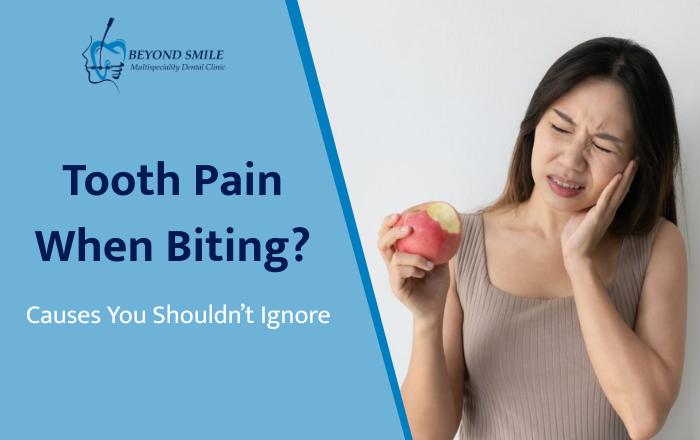
You take a bite of your favorite food and — ouch. A sharp, sudden pain shoots through your tooth. You pause, wait for it to pass, and tell yourself it’s probably nothing. Sound familiar? Tooth pain when biting is something millions of people experience, yet most brush it off and hope it disappears. But here’s what you need to know: that pain is your tooth asking for help. Ignoring it almost always makes things worse — and more painful down the line. Let’s talk about what’s really going on when your tooth hurts when biting down — and what you should do about it. Why Does My Tooth Hurt When I Bite Down? There isn’t one single answer. Tooth pain when biting can come from several different causes, and each one needs a different fix. The good news? Most are very treatable — especially when caught early. Here are the most common reasons behind that painful bite. 1. A Cracked Tooth — The Sneaky Culprit A cracked tooth is one of the top reasons people experience sharp tooth pain when biting. The tricky part? You often can’t see the crack, and it might not even show up on a regular X-ray. When you bite down, the crack flexes just enough to irritate the nerve inside — causing that quick, stabbing pain that disappears almost as fast as it came. Who gets cracked teeth most often? People who grind their teeth at night Those who chew on ice or hard foods regularly Teeth that already have large fillings If the pain hits when you bite and when you release pressure — a cracked tooth is very likely the cause. 2. Tooth Decay (Cavities) — More Than Just a Hole Cavities start small and silent. In the early stages, there’s no pain at all. But once the decay reaches the deeper layer of the tooth (called dentin), tooth pain when chewing becomes a real and growing problem. Left untreated, that decay reaches the nerve, turning a simple filling into a root canal — or worse, a lost tooth. Signs a cavity might be behind your bite pain: Dark spots or visible pits on the tooth Sensitivity to sweets, hot, or cold food alongside tooth pain when biting A dull, lingering ache after meals 3. An Old or Damaged Filling Fillings don’t last forever. Over years of use, they can crack, wear down, or lift slightly at the edges. When this happens, biting pressure causes tooth pain when biting down — because the tooth no longer has proper protection. A filling that was placed too “high” can also be the problem. Even a tiny difference in bite height puts uneven pressure on the tooth every single time you chew. Did your pain start right after a dental visit? That’s a clear sign your filling may need a quick adjustment. 4. Gum Disease — The Problem Hiding Below the Surface Gum disease doesn’t just affect your gums — it slowly destroys the bone and tissue that hold your teeth in place. As that support weakens, teeth become loose and painful, making tooth pain when biting a daily reality. According to the CDC, nearly 47% of adults over 30 have some form of gum disease. Many don’t even know it. Watch for these signs alongside bite pain: Bleeding or swollen gums Bad breath that won’t go away Gums that look like they’re pulling back from the teeth 5. A Dental Abscess — Don’t Wait on This One A dental abscess is a serious infection inside or around the tooth. It builds up pressure, making even the lightest bite feel unbearable. The pain is usually throbbing, severe, and constant — and it can spread to your jaw, neck, or ear. This is not something to manage with painkillers and hope. An untreated abscess can spread to surrounding bone and tissue, creating a real medical emergency. 🚨 Seek immediate dental care if you have: Severe, non-stop tooth pain Facial or jaw swelling Fever alongside tooth pain when biting A bad taste in your mouth 6. Sinus Infection — Yes, It Can Feel Like Tooth Pain Surprising but true — a sinus infection can cause tooth pain when biting, especially in the upper back teeth. Their roots sit right next to the sinus cavity, so when sinuses get congested and inflamed, that pressure mimics dental pain. Clue: If multiple upper teeth hurt at the same time, and you’re also congested or have facial pressure, your sinuses may be the real problem — not your teeth. What Happens If You Ignore Tooth Pain When Biting? This part matters. Here’s the honest reality of waiting: A small crack → becomes a full split requiring extraction A cavity → reaches the nerve and needs a root canal An abscess → spreads and may require hospitalization Gum disease → leads to permanent bone loss and loose teeth Every week of delay makes the treatment harder, longer, and more costly. Tooth pain when biting never just “goes away” — it evolves. Quick Things You Can Do Before Your Appointment Avoid chewing on the painful side Eat soft foods — yogurt, soup, mashed foods Take ibuprofen to reduce pain and inflammation Rinse gently with warm salt water These steps won’t fix the problem — but they’ll help you stay comfortable until you get proper care. FAQ Q: My tooth hurts when biting but there’s no cavity — why? Cracks, gum disease, a bruised tooth ligament, or sinus pressure can all cause tooth pain when biting even without a visible cavity. Q: Will the pain go away on its own? Rarely. Most causes of tooth pain when biting down worsen without treatment. Q: Can grinding cause bite pain? Yes. Grinding puts enormous force on teeth, causing cracks, worn enamel, and nerve irritation all leading to tooth pain when chewing. Stop the Pain — Visit Beyond Smile Dental Clinic, Ballygunge If tooth pain when biting has been slowing you down, it’s time to get a