
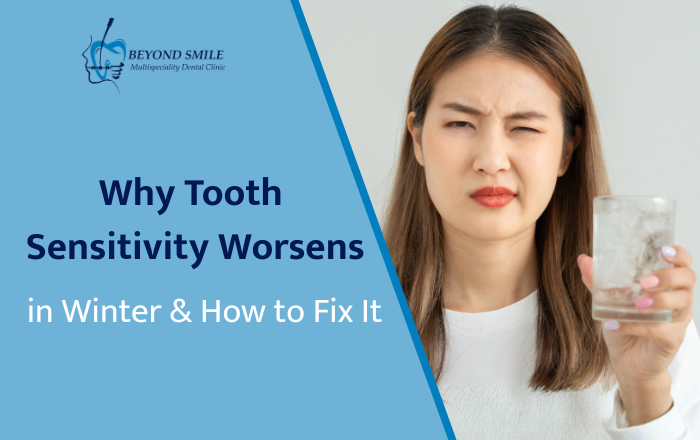
Have you ever stepped outside on a cold winter morning, taken a deep breath, and felt a sharp, sudden pain shoot through your teeth? You’re not alone. Millions of people notice their tooth sensitivity in winter becomes almost unbearable. That steaming cup of coffee that usually brings comfort? Now it makes you wince. Even breathing in cold air feels like tiny needles pricking your teeth.
If you’ve been wondering why your sensitive teeth in cold weather are causing so much trouble, the answer lies in how winter affects your dental health. The good news? Understanding what’s happening means you can take simple steps to feel better—and we’re here to help you do exactly that.
Why Cold Weather Makes Your Teeth Hurt
Your teeth aren’t just solid blocks—they have layers. The outer layer, called enamel, protects the softer inside parts. When temperatures drop, your enamel contracts slightly. If you have worn enamel or exposed roots, this contraction allows cold air to reach the nerves inside your teeth, causing that sharp pain you feel.
Think of it like this: your teeth are constantly expanding and contracting with temperature changes. In winter, when you drink something hot and then step outside into freezing air, your teeth go through rapid changes that can create tiny cracks in already-weak enamel.
Over 40 million adults deal with sensitive teeth, and winter makes it significantly worse for most of them.
5 Reasons Winter Tooth Pain Gets Worse
1. Hot and Cold Temperature Swaps
Winter means more hot chocolate, coffee, and tea—followed by blasts of cold air when you go outside. These quick temperature changes stress your enamel and irritate the nerves in your teeth.
2. Dry Air Reduces Saliva
Cold weather and indoor heating dry out your mouth. Saliva naturally protects your teeth from acids and bacteria. Less saliva means less protection, making sensitivity worse.
3. Sinus Pressure Feels Like Tooth Pain
Winter colds and sinus infections create pressure that affects your upper teeth. Sometimes what feels like tooth sensitivity is actually sinus pressure mimicking dental pain.
4. You Grind Your Teeth More
The holiday season brings stress, and cold weather causes jaw tension. Many people grind their teeth at night without realizing it, wearing down enamel and making teeth more sensitive. Studies show up to 31% of adults grind their teeth, with many noticing it gets worse in colder months.
5. Breathing Cold Air Directly
When you breathe through your mouth outdoors, cold air hits your teeth directly. Athletes, joggers, and anyone who spends time outside in winter are especially prone to this type of winter tooth sensitivity.
7 Simple Ways to Fix Tooth Sensitivity
1. Use Desensitizing Toothpaste
Look for toothpaste with potassium nitrate or stannous fluoride. These ingredients block pain signals from reaching your tooth nerves. Brush twice daily, and for extra relief, apply a small amount to sensitive spots before bed. You should notice improvement within 2-4 weeks.
2. Brush Gently with a Soft Brush
Aggressive brushing wears down your enamel. Use a soft-bristled toothbrush and gentle circular motions. Brush for two minutes, twice a day, holding your brush at a 45-degree angle to your gum line.
3. Avoid Acidic Foods and Drinks
Citrus fruits, wine, and soda weaken your enamel. In winter, we consume more of these without realizing it. If you do eat or drink something acidic, rinse your mouth with water immediately—but wait 30 minutes before brushing, as brushing right away can damage softened enamel.
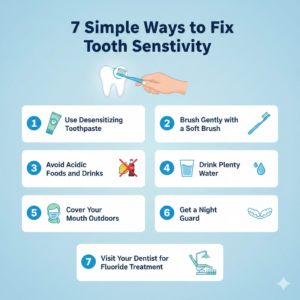
4. Drink Plenty of Water
Even when it’s cold outside, your body needs water. Aim for 8 glasses daily to keep saliva flowing. Chew sugar-free gum to stimulate saliva production. Consider using a humidifier at home to add moisture to dry indoor air.
5. Cover Your Mouth Outdoors
Wrap a scarf over your mouth when temperatures drop. This simple trick warms the air before it reaches your teeth. Try to breathe through your nose when possible—your nasal passages naturally warm incoming air.
6. Get a Night Guard
If you grind your teeth, a night guard creates a protective barrier. Your dentist can fit you with one that’s comfortable and effective at reducing pressure on your teeth.
7. Visit Your Dentist for Fluoride Treatment
Professional fluoride treatments strengthen your enamel and create a protective shield against cold weather tooth sensitivity. These treatments are quick, painless, and can provide relief for months.
When Should You See a Dentist?
While occasional sensitivity is normal, certain signs mean it’s time to get professional help:
- Pain that lasts more than a few seconds after the trigger is gone
- Sensitivity in just one tooth (could mean a cavity or crack)
- Visible chips, cracks, or worn spots on your teeth
- Bleeding or swollen gums along with sensitivity
- Pain that stops you from eating, drinking, or going about your day normally
Don’t ignore these warning signs. What starts as mild sensitivity can indicate bigger problems like gum disease, cavities, or enamel erosion that need treatment.
Frequently Asked Questions
Q1. Why do my teeth hurt only in winter?
Cold air causes your enamel to contract. If you have exposed nerves or weak enamel, this contraction triggers pain. Winter habits like drinking hot beverages before going outside also create rapid temperature changes that worsen sensitivity.
Q2. How long does desensitizing toothpaste take to work?
Most people feel relief within 2-4 weeks of regular use. For faster results, apply it directly to sensitive areas at night without rinsing.
Q3. Is tooth sensitivity serious?
Mild, occasional sensitivity usually isn’t serious. But persistent pain could signal cavities, gum disease, or cracked teeth. If home remedies don’t help within 2-3 weeks, see your dentist.
Get Relief from Winter Tooth Pain Today
Tooth sensitivity in winter doesn’t have to control your life. Simple changes like using the right toothpaste, protecting your mouth from cold air, and staying hydrated can make a real difference. But if your sensitive teeth aren’t improving or if the pain is affecting your daily activities, it’s time to seek help.
Ready for Real Relief?
If you’re in Ballygunge and struggling with tooth sensitivity, Beyond Smile Dental Clinic is here to help. Led by Dr. Ankit Saha, our clinic offers effective teeth sensitivity treatment that gets to the root of your problem—not just masks the symptoms.
We provide treatments including fluoride therapy, dental bonding, and solutions for gum recession—all designed to give you lasting relief from winter tooth pain. Your comfort matters, and we’re committed to helping you enjoy every season without dental discomfort.
📞 Book your appointment at Beyond Smile Dental Clinic
📍 Located in Ballygunge
👨⚕️ Care by Dr. Ankit Saha
Don’t spend another winter dealing with tooth pain. Let us help you smile comfortably again!