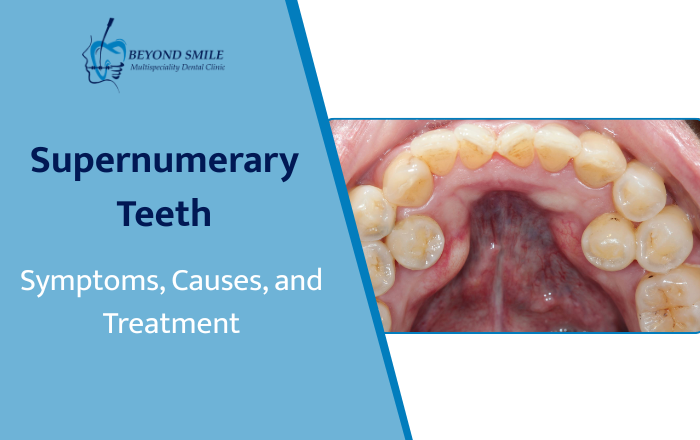
Have you ever heard of someone having extra teeth? It might sound unusual, but supernumerary teeth—also called extra teeth or hyperdontia—affect about 1-4% of people worldwide. These bonus teeth can pop up anywhere in your mouth, sometimes visible and sometimes hidden beneath your gums.
If you’ve noticed an unusual tooth growing in your mouth or your child’s smile looks a bit crowded, you’re in the right place. Let’s explore what supernumerary teeth are, why they happen, and what you can do about them.
What Are Supernumerary Teeth?
- Supernumerary teeth are extra teeth that develop beyond the normal set. Most adults have 32 teeth (including wisdom teeth), and children have 20 baby teeth. When additional teeth form, they’re called supernumerary.
These extra teeth can appear in several forms:
- Mesiodens – The most common type, growing between your upper front teeth
- Paramolar – Extra teeth that appear next to your molars
- Distomolar – Located behind your wisdom teeth
- Supplemental teeth – Extra teeth that look like normal teeth
Supernumerary teeth are more common in males than females and usually develop during childhood, though adults can have them too.
Recognizing the Symptoms of Supernumerary Teeth
Sometimes extra teeth are easy to spot, but other times they stay hidden. Here’s what to look for:
Visible Signs
- An extra tooth you can see in your mouth
- Crowding or crooked permanent teeth
- A noticeable gap between your front teeth
- Delayed eruption of normal teeth in children
Hidden Symptoms
When supernumerary teeth are stuck beneath the gums (impacted), you might experience:
- Pain or discomfort in your jaw
- Swelling or tenderness in your gums
- Trouble chewing food
- Speech problems, especially in young children
Many people don’t even know they have extra teeth until a dentist spots them on an X-ray during a routine checkup. This is why regular dental visits matter so much.
What Causes Supernumerary Teeth?
The exact cause of hyperdontia isn’t always clear, but research points to several factors:
– Genetics
Supernumerary teeth often run in families. If you have them, there’s a chance your children might develop them too. Certain genetic conditions can also increase the likelihood of extra teeth.
– Medical Conditions
Some syndromes are linked to hyperdontia, including:
- Gardner’s syndrome
- Cleidocranial dysplasia
- Cleft lip and palate
– Developmental Factors
Sometimes, the cells responsible for tooth formation become overactive during development, leading to extra teeth. In many cases, doctors simply don’t know why they occur.
Problems That Can Happen with Untreated Supernumerary Teeth
While some extra teeth never cause trouble, others can lead to real problems:
- Crowding – Your teeth may become crooked or overlap, making brushing difficult
- Blocked teeth – Normal teeth may struggle to come through properly
- Tooth decay – Crowded teeth are harder to clean, increasing cavity risk
- Cyst formation – Fluid-filled sacs can develop around impacted
- supernumerary teeth Root damage – Extra teeth can damage the roots of nearby teeth
If your child has supernumerary teeth, they might also affect their smile’s appearance or make speaking clearly more difficult.
How Dentists Diagnose Extra Teeth
Diagnosing supernumerary teeth usually involves:
- Visual examination – Your dentist checks your mouth for visible extra teeth
- X-rays – Panoramic or periapical X-rays reveal hidden teeth beneath the gums
- 3D imaging – For complex cases, a CBCT scan provides detailed images
If you notice any unusual teeth or your child’s teeth seem crowded, schedule a dental appointment. Early detection makes treatment easier.
Treatment Options for Supernumerary Teeth
Treatment depends on where the extra tooth is located and whether it’s causing problems.
Monitoring
If the supernumerary tooth isn’t causing pain, crowding, or other issues, your dentist might suggest watching it over time with regular checkups.
Extraction
- When extra teeth cause problems, removal is often recommended. The process includes:
- Simple extraction – For visible teeth, the dentist numbs the area and removes the tooth
- Surgical removal – For impacted supernumerary teeth, a small incision in the gum is needed
Most people recover within a few days to a week. Your dentist will provide pain medication and care instructions.
Orthodontic Treatment
After removing extra teeth, braces might be needed to straighten crowded or misaligned teeth. Many children undergo extraction first, then get braces once their permanent teeth settle.
Recovery After Supernumerary Tooth Removal
If you need a supernumerary tooth removed, here’s what to expect:
- The procedure uses local anesthesia, so you won’t feel pain during removal
- Some discomfort and swelling afterward is normal
- Eat soft foods for a few days
- Avoid using straws, as suction can disrupt healing
- Take prescribed pain medication as directed
- Most people return to normal activities within 3-5 days
Call your dentist if you experience severe pain, excessive bleeding, or signs of infection.
Do All Supernumerary Teeth Need Removal?
Not always! If your extra tooth isn’t causing crowding, pain, or decay risk, your dentist might recommend leaving it alone and monitoring it regularly. The decision depends on:
- Location of the tooth
- Whether it’s affecting other teeth
- Your age
- Risk of future complications
Your dentist will help you make the best choice for your situation.
Get the Care You Need at Beyond Smile Dental Clinic Ballygunge
If you or your child is dealing with supernumerary teeth, getting proper diagnosis and treatment is important. At Beyond Smile Dental Clinic in Ballygunge, Dr. Ankit Saha provides caring treatment for patients with extra teeth.
The clinic offers:
- Accurate diagnosis with digital X-rays
- Comfortable extraction procedures
- Treatment options for all ages
- Friendly care for nervous children
- Clear explanations of your treatment plan
Don’t let extra teeth affect your oral health or confidence. Dr. Ankit Saha at Beyond Smile Dental Clinic in Ballygunge can evaluate your condition and recommend the best path forward.
Book your appointment today and take the first step toward a healthier smile!