
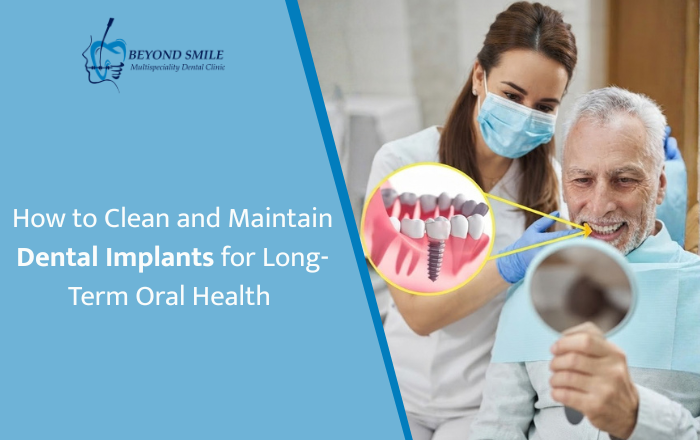
A dental implant is a small post, usually made of titanium, that replaces the root of a missing tooth. A crown, bridge or denture is attached on top. The implant cannot decay like a natural tooth, but the gum and bone around it can still become inflamed if plaque is left behind. That is why dental implant cleaning deserves the same daily attention as your natural teeth.
The routine is simple: a few minutes at home each day, plus regular dental visits. Your exact routine may vary with your type of restoration, the health of your gums and your dentist’s advice.
Why Proper Dental Implant Care Matters
Plaque is a sticky film of bacteria that forms daily on implant crowns and along the gumline. If it stays there, the gum around the implant can turn red, swell or bleed. This early stage is called peri-implant mucositis. It affects only the soft gum and can often be managed with better cleaning and a professional clean.
If the inflammation continues, it can reach the bone that supports the implant. This is called peri-implantitis: a gum and bone infection around an implant, similar to gum disease around natural teeth. It can develop slowly and without much pain, so regular checkups are useful even when everything feels normal.
Good dental implant oral hygiene helps keep the gums healthy, protects the supporting bone and keeps the crown or bridge clean and comfortable.
If you are still exploring treatment, our dental implants treatment page explains how the procedure works.
How to Clean Dental Implants Properly
Brush Twice a Day
Brush for about two minutes every morning and night with a soft toothbrush and a fluoride toothpaste that is not too abrasive. Angle the bristles towards the gumline and use small, gentle circles instead of hard scrubbing.
Manual and electric toothbrushes can both work well when used correctly. Our article on whether electric toothbrushes are better than manual ones explains the differences.
Clean Around the Implant
When cleaning dental implants, focus on where the crown meets the gum, because plaque tends to settle there. Spend a few extra seconds on this area, cleaning the outer side, the inner side and both sides of the crown. A single tufted toothbrush (one with a small cluster of bristles) can help you reach implants at the back of the mouth.
Floss or Use Cleaning Aids Made for Implants
Yes, you can floss around dental implants, but the technique and cleaning aid may differ from natural teeth. Your dentist may suggest:
- Implant floss: thicker floss with a spongy section that wraps around the base of the crown.
- Floss threaders: loops that guide floss under a bridge or joined crowns.
- Tape or unwaxed floss: often easier to slide gently around an implant.
Curve the floss around the crown and move it gently up and down without snapping it into the gum.
Consider an Interdental Brush or Water Flosser
Interdental brushes are tiny brushes for the gaps between teeth. Choose ones with plastic coated or nylon coated wire so bare metal does not scratch the implant, and ask your dentist which size suits you.
A water flosser rinses away food and loose plaque with a thin stream of water, which can help around bridges and full arch restorations. Start on a low setting and aim along the gumline.
Keep Your Tongue and Overall Mouth Clean
Bacteria also live on the tongue and cheeks. Clean your tongue gently with a tongue cleaner or toothbrush. Use a mouthwash only as your dentist advises, since some rinses are meant for short use.
What Should You Avoid When Cleaning Dental Implants?
Try to avoid:
- Hard bristled toothbrushes and aggressive brushing, which can wear down the gum.
- Very abrasive toothpastes, such as some whitening or charcoal products, which may scratch the crown.
- Pins, metal toothpicks or other metal objects for removing trapped food.
- Forcing floss or interdental brushes into tight spaces.
- Smoking and chewing tobacco, which are linked to poorer gum health. Our guide on how tobacco affects your teeth and gums explains more.
- Skipping dental visits because the implant feels fine.
If you clench or grind your teeth at night, tell your dentist. They may suggest a protective night guard.
How Often Is Professional Dental Implant Cleaning Needed?
Many people with implants are advised to have a checkup and professional cleaning about every six months. Some need visits every three or four months, for example with a history of gum disease, diabetes or difficulty cleaning at home. Your dentist will suggest a schedule that suits you.
During a professional dental implant cleaning, the team uses instruments suited to implant surfaces to remove plaque and tartar (hardened plaque). They may also check your gums, bite and restoration, take dental images when needed, and review your home cleaning technique.
These visits matter even when the implant feels fine, because early gum changes often cause no pain. Our page on professional teeth cleaning in Ballygunge describes what a cleaning visit involves.
Signs That Your Dental Implant Needs Dental Attention
Contact your dentist if you notice:
- bleeding from the gum around the implant
- redness, swelling or tenderness
- pus or discharge near the implant
- a bad taste or bad breath that does not go away
- the gum shrinking back from the implant
- pain or discomfort when biting
- a crown or implant that feels loose
- a change in the way your teeth meet
These signs are not always serious, but a dentist should check them.
Daily Dental Implant Care Routine
A simple routine you can adjust with your dentist:
- Morning: brush teeth and implants for two minutes, focusing on the gumline, then clean your tongue.
- After meals: rinse with water when you can.
- Night: floss or use an interdental brush around each implant, use a water flosser if advised, then brush for two minutes.
- Every three months: replace your toothbrush or brush head, sooner if the bristles splay.
- As scheduled: attend checkups and professional cleaning.
Can Dental Implants Last for Many Years?
Dental implants can last for many years in many people, but no one can promise a fixed lifespan. It depends on your daily cleaning habits, gum and jawbone health, general health conditions such as diabetes, tobacco use, teeth grinding, the type of restoration and how regularly you attend checkups.
The crown or bridge may also need repair or replacement at some point due to normal wear. Steady dental implant maintenance gives your implant a good chance of staying healthy, though no routine can promise a particular result. If you are missing a tooth and weighing your options, read what happens if you don’t replace a missing tooth.
Frequently Asked Questions About Dental Implant Care
1. How do you clean dental implants at home?
Brush twice a day with a soft toothbrush, focusing on the gumline around the implant, and clean between teeth once a day with floss, an interdental brush or a water flosser, as your dentist recommends.
2. How often should dental implant cleaning be done?
At home, every day: brush twice and clean between teeth at least once. Professional dental implant cleaning is commonly done about every six months, though some patients need more frequent visits depending on their gums and restoration.
3. Can you floss around dental implants?
Yes, you can floss around dental implants, but the technique and cleaning aid may differ from natural teeth. Your dentist can recommend the most suitable method based on your implant and surrounding gums.
4. Is a water flosser good for dental implants?
It can help, especially around bridges and hard to reach spots, but it should be used together with brushing, not instead of it.
Getting Help With Dental Implant Care in Kolkata
If you have persistent bleeding, swelling, discomfort, a bad taste, a loose implant, or questions about cleaning around your implant, see a dentist rather than waiting.
If you live near Ballygunge or Gariahat, you can visit Beyond Smile Dental Clinic in Kolkata. The clinic’s dentists include Dr. Ankit Saha, MDS, Experienced Endodontist and Dentist, with 11+ years of clinical expertise, and Dr. Dhruvi Parikh, MDS, Orthodontist and Dentofacial Orthopedics Specialist, with 10+ years of experience. A visit can include an examination of your implant and gums, plus guidance on a cleaning method that fits your needs.
Address: 23, Ballygunge Gardens, Gariahat, Kolkata, West Bengal 700019
Phone: 74399 96185
You can also get in touch with the clinic team to ask about an appointment.