You’re standing in a pharmacy aisle, staring at a shiny electric toothbrush with a ₹3,000 price tag. Your current manual brush costs ₹50 and seems to do the job just fine. So you wonder — is an electric toothbrush vs manual really worth the switch, or is it just clever marketing?
You’re not alone. This is one of the most common questions people ask their dentist. And the honest answer? It depends but the research does lean in one direction. Let’s break it all down simply, so you can make the right choice for your smile.
What’s Actually the Difference Between Electric and Manual Toothbrushes?
A manual toothbrush works exactly as it sounds — you move it back and forth yourself. The results depend almost entirely on your technique, pressure, and how long you brush. Most people, without realising it, rush through brushing, press too hard, or miss spots near the gumline.
An electric toothbrush does the movement for you. Depending on the type, it either oscillates (spins in small circles), vibrates sonically, or uses ultrasonic technology to break up plaque. The brush head moves thousands of times per minute — far more than your hand ever could.
The real difference isn’t just the tool. It’s the technique gap. Even a basic electric toothbrush corrects many of the brushing mistakes people make without knowing it.
7 Proven Benefits of Electric Toothbrushes
Research strongly supports electric toothbrushes for most people. A large Cochrane Review — one of the most trusted sources in medical research — found that electric brushes remove 21% more plaque than manual ones and reduce gum inflammation by 11% over time.
Here’s what makes them stand out:
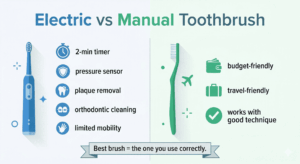
- Superior plaque removal — The rapid movement cleans along the gumline and between teeth far more effectively than manual brushing.
- Built-in timers — Most electric brushes buzz or pause every 30 seconds to guide you through a full 2-minute brush. Most manual brushers stop well before that.
- Pressure sensors — Brushing too hard is one of the biggest causes of enamel wear and gum recession. Many electric models vibrate or slow down when you’re pressing too hard — something a manual brush simply can’t do.
- Easier for people with limited mobility — If you have arthritis, reduced grip strength, or any condition affecting your hands, an electric brush does the work for you.
- Gentler on sensitive gums — With the right mode, electric toothbrushes for sensitive teeth are often gentler than the unconscious scrubbing people do with a manual brush.
- Great for kids — Children often find electric brushes fun. The built-in timer turns brushing into a game and helps build the habit early.
- Better cleaning with braces — This is a big one. If you’re wearing braces or aligners, an electric toothbrush for braces cleans around brackets and wires much more thoroughly.
When a Manual Toothbrush Is Perfectly Fine
To be fair — a manual toothbrush is not useless. If you brush with great technique, take your full two minutes, use a soft-bristle brush, and visit your dentist regularly, a manual brush can absolutely keep your teeth healthy.
Manual brushes are also more travel-friendly, need no charging, and cost a fraction of the price. For people who are disciplined about their routine, they work well.
The key takeaway: the best toothbrush is the one you use correctly and consistently.
Which One Is Right for YOUR Needs?
There’s no one-size-fits-all answer when it comes to the best toothbrush for teeth. Here’s a simple guide:
- Kids & teens: Electric brushes with fun designs and timers build better habits early.
- Braces wearers: An electric toothbrush vs manual comparison is almost no contest here — electric wins for cleaning around orthodontic hardware.
- Sensitive teeth or receding gums: Look for an electric brush with a sensitive mode and pressure sensor.
- Older adults: Electric brushes reduce the physical effort needed and improve results.
- Tight budget: A quality manual brush with a proper technique still does a solid job. Focus on your habits first.
5 Common Brushing Mistakes That Cancel Out Your Brush Type
Switching to an electric toothbrush won’t help much if you’re making these mistakes:
- Brushing too hard — Even with an electric brush, pressing down too hard damages gums and enamel over time.
- Skipping the gumline — Most people brush tooth surfaces and forget the area where teeth meet gums. That’s where plaque loves to hide.
- Not brushing long enough — Two minutes, twice a day. That’s the standard — and most people fall short.
- Forgetting the inner surfaces and tongue — The back side of your teeth and your tongue carry bacteria that cause bad breath and decay.
- Waiting too long to replace your brush — Replace brush heads (or manual brushes) every 3 months. Frayed bristles clean poorly and can scratch gum tissue.
What Dentists Really Recommend
Here’s the honest answer from dental professionals: it’s about habits, not just tools.
An electric brush gives you a real advantage, especially if your brushing technique isn’t perfect (most people’s isn’t). But no brush — electric or manual — replaces a proper dental check-up. Many problems like early cavities, gum disease, or teeth grinding are invisible to you until a dentist spots them.
The most valuable thing you can do for your oral health is combine good daily brushing habits with regular professional check-ups.
FAQs
Q1. Is an electric toothbrush worth the money?
For most people, yes. The improvement in plaque removal and gum health often means fewer dental issues and fewer dental bills over time.
Q2. Can I use an electric toothbrush with braces?
Yes. Sonic electric brushes clean particularly well around brackets. Your orthodontist can recommend the best type for your treatment.
Q3. Do electric toothbrushes damage enamel?
Not when used correctly. Models with pressure sensors actually protect enamel by alerting you when you’re brushing too hard.
Q4. How often should I change the brush head?
Every 3 months — or earlier if the bristles look worn. Most brush heads have colour-indicator bristles that fade when it’s time to replace.
Q5. Are electric toothbrushes safe for kids?
Yes. Child-specific models with softer bristles and 2-minute timers are widely available and dentist-recommended.
Ready to Get the Right Advice for Your Smile?
The right toothbrush matters but the right dentist matters more.
At Beyond Smile Dental Clinic in Ballygunge, Dr. Ankit Saha and Dr. Dhruvi Parikh(Orthodontist) help patients build strong oral health habits and get the most from their dental care. Whether you need a routine check-up, orthodontic guidance, or just want to know which toothbrush suits your teeth — the team is here for you.
Book your visit today and take the first step toward a healthier, happier smile.